

When starting a home renovation, the first instinct is often to dive straight into tearing things down and building them back up. However, in the interior remodeling business, the success of a project relies not just on how beautiful the final result looks, but on how well we protect the rest of your home and maintain safety during the process
Protecting the worksite before any demolition begins is a critical phase of preparation. It is what separates a chaotic, messy project from a clean, professional experience that aligns with top industry safety standards
Why is worksite protection vital?
1. Prevents Costly and Unnecessary Damage: During a bathroom, kitchen, or flooring demolition, heavy tools and sharp debris can scratch, dent, or stain surfaces that are meant to stay untouched.
2. Strict Dust Control (Health and Cleanliness): Construction dust spreads incredibly fast. Furthermore, under OSHA’s Respirable Crystalline Silica Standard (29 CFR 1926.1153), dust from breaking tiles, concrete, or stone contains hazardous particles. Professional sealing protects our workers’ health and safeguards your home’s indoor air quality.
3. Legal Compliance and Housekeeping: Keeping a job site clean and organized isn’t just about looks. We strictly follow OSHA’s Housekeeping Regulation (29 CFR 1926.25) to ensure all walkways, stairs, and work zones remain clear of dangerous debris and tripping hazards.
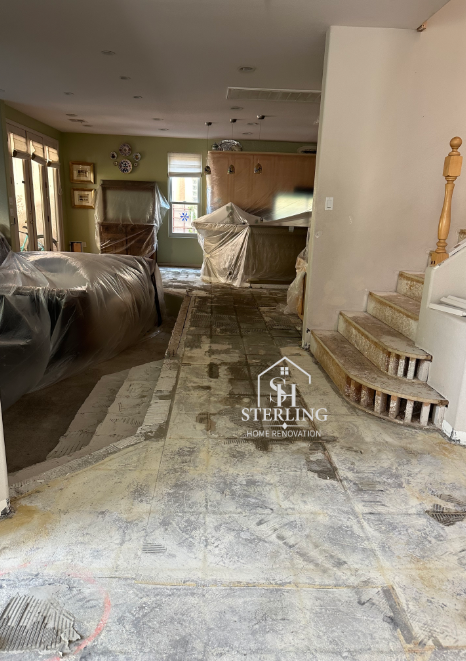
Step-by-Step: Preparation Before Demolition
To ensure the workspace and the rest of your house remain intact, we follow a rigorous protection protocol before any flooring, bathroom, or kitchen tear-out begins:
1. Complete Clearing and Cleaning of the Area
Before laying down any protection, it is essential to remove all furniture, decor, and personal items. Afterward, the area must be thoroughly vacuumed. Any tiny grain of sand or concrete dust trapped underneath your protective layers can act like sandpaper under the weight of heavy foot traffic.
2. Protecting Existing Floors with Professional Materials
We never leave nearby floors exposed just because they aren’t part of the remodel. To shield them properly:
- Heavy-duty, high-impact materials: We utilize professional products like Ram Board or heavy-duty floor protection cardboard to absorb impacts from dropped tools and heavy waste.
- Smart taping techniques: Never apply strong construction tape directly onto hardwood floors or finished tiles, as the adhesive can strip the finish away. The professional method is to apply low-tack painter’s tape to the surfaces first, and then layer the stronger tape over it to hold the cardboard down securely.
3. Dust Sealing and Containment (OSHA Compliant)
To stop demolition dust from traveling to other areas of the house, we build plastic barrier walls and use zippered containment systems on doorways. This keeps the dust strictly confined inside the kitchen, bathroom, or specific room being worked on, preventing your family from inhaling harmful airborne particles.
4. Establishing Safe Traffic Routes
The paths workers use to enter and exit the house experience heavy foot traffic from work boots, moving tools, and rolling wheelbarrows loaded with heavy debris. These paths are fully covered and reinforced to prevent scratches and maintain a clear, hazard-free pathway.
Conclusion
Demolition is naturally a messy and noisy process, but it should never put the rest of your home at risk. In our business, investing time in worksite protection and adhering to OSHA safety guidelines is the hallmark of a high-quality, successful, and professional remodeling project.